“Gendered Karmic Consequence: Meditation Sickness and Resolution in a Thai Bhikkhuni Temple”
Daphne Weber
Program Officer of Buddhist Studies at the American Council of Learned Societies
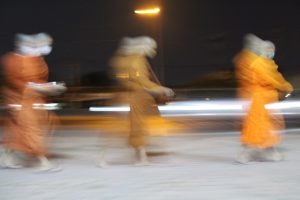
Institutions of Theravāda Buddhism do not socially recognize women as female monks, a limitation that profoundly impacts the accessibility of qualified meditation teachers for women practitioners. Despite this lack of institutional recognition, women, known as bhikkhunis, continue to pursue ordination and engage in meditative practices. This paper examines how this systemic exclusion contributes to a phenomenon known as “meditation sickness”—a set of emotional and physical disturbances that can arise from improper meditation techniques or inadequate guidance.
Focusing on the experiences of Ananda before and during her samaneri ordination in Thailand, I explore how the absence of gendered mentorship both creates and exacerbates meditation sickness. In this case study, meditation sickness was provoked by inexplicable bouts of physical illness and distressing visions. Through ordination, Ananda underwent intensive meditation instruction to confronting karmic beliefs tied to female rebirth, which she ultimately identified as the cause of her meditation sickness. Ananda’s experiences represent many who come to bhikkhuni monasteries in Thailand and underscores the necessity of skilled teachers to guide practitioners through the emotional and spiritual upheavals of meditation. Bhikkhunis’ unique meditation techniques, including “slow-motion” sensory engagement, are not only tools for enlightenment but also methods to “undo” prior harmful practices and reinterpret culturally ingrained notions of gender and karma.
Through an analysis of Ananda’s experiences and transformative ordination journey at a Thai bhikkhuni temple, I argue for the critical importance of gendered mentorship in Buddhist practice, especially meditation. This understudied aspect of meditation highlights how bhikkhunis, despite systemic barriers, reconstitute gender roles and challenge the cultural stigmatization of female birth as negative karma through their meditation retreat during ordination. By addressing the root causes of meditation sickness, these bhikkhunis offer a model for a more inclusive and holistic approach to spiritual practice within Theravada Buddhism.
Daphne Weber is the Program Officer of Buddhist Studies at the American Council of Learned Societies. Daphne received her PhD in Anthropology with expertise in Theravada Buddhism and gender studies, particularly in the context of Thai Bhikkhuni (female monastic) communities. Her dissertation and publications address issues of gender, body, and healing in Buddhist contexts. Daphne’s work is distinguished by her extensive participatory field research in Thai temples, supported by awards such as the Fulbright-Hays Doctoral Dissertation Research Abroad Fellowship and the Khyentse Foundation Dissertation Scholarship.
In addition to her research, Daphne has taught introductory and advanced courses in anthropology incorporating theories from gender studies and cross-cultural perspectives. She enthusiastically aids and participates in coordinating study abroad experiences. Her emphasis on cross-cultural exposure as a key part of education demonstrates a commitment to both scholarship and community engagement.